
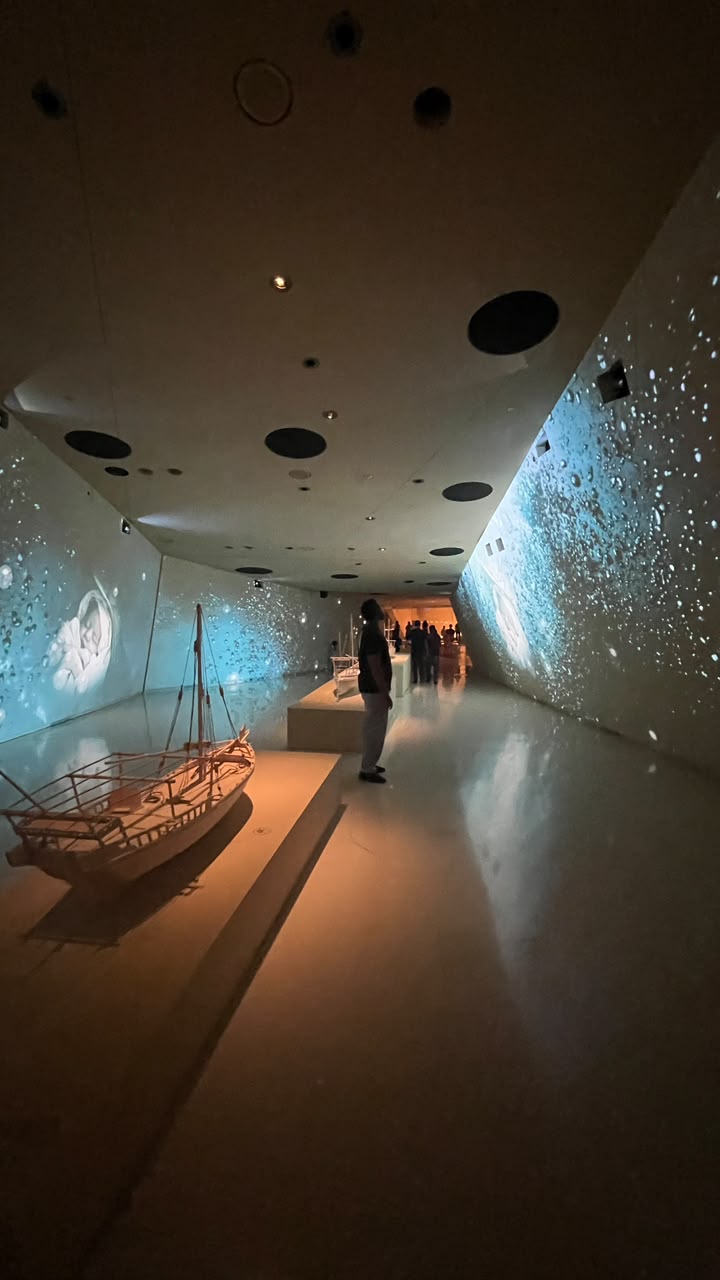
A boat model surrounded by blue light.
That is one of the scenes from my visit to the National Museum of Qatar that stays with me. The model sat under warmer light, while projected imagery filled the walls around it. My eye went to the boat first, then to the scene surrounding it. An object in a display became part of a much larger story.
As I moved through the galleries, I kept noticing the relationship between the exhibits and the light around them. Some displays invited a close look at a small detail. Others expanded across the walls, bringing objects, images, and architecture into the same scene.
Light guides attention
In the maritime gallery, the difference between the warmer illumination on the boat and the blue imagery around it gave the scene a clear focus. The object held its own presence within the wider visual story.
That balance interests me as a lighting designer. When several elements share a space, brightness, direction, and colour can help establish where the eye goes first. The visitor can take in the object, then discover its surroundings.
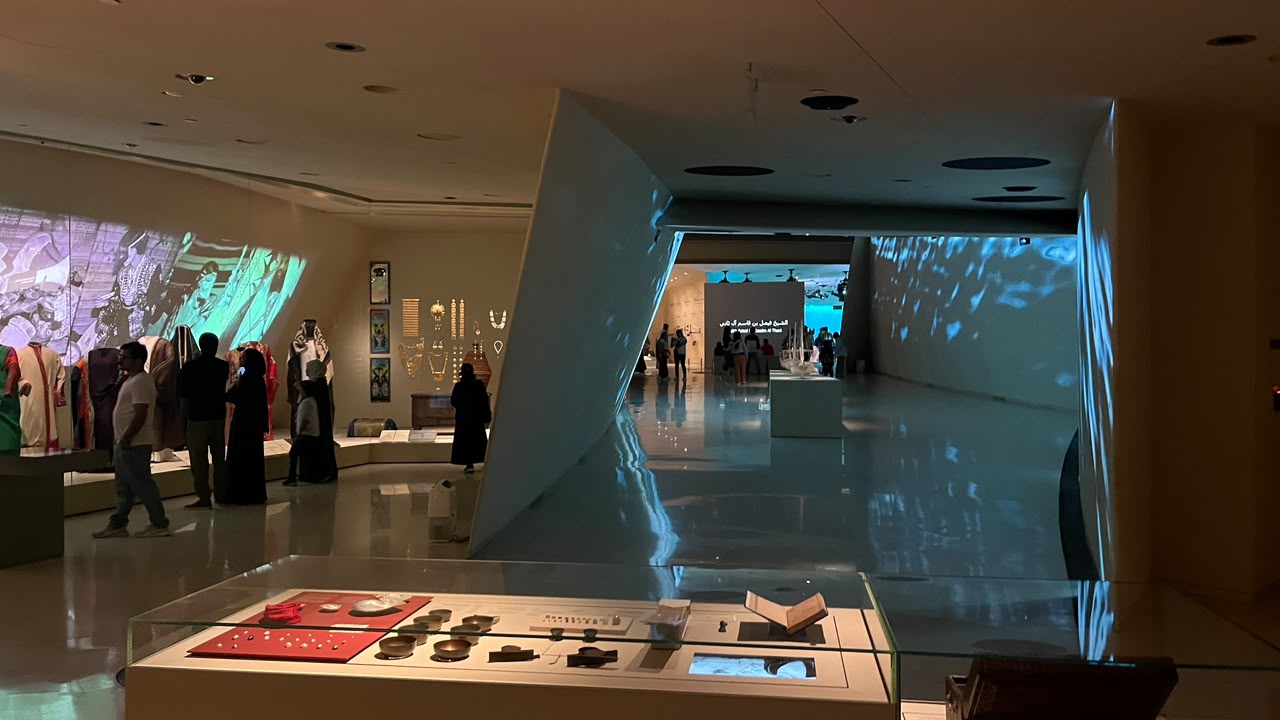
The nearby display cases created a different kind of encounter. Smaller objects sat within illuminated cases, while projections continued across the architecture beyond them. Looking closely and taking in the wider gallery became two parts of the same visit.
Light reveals detail
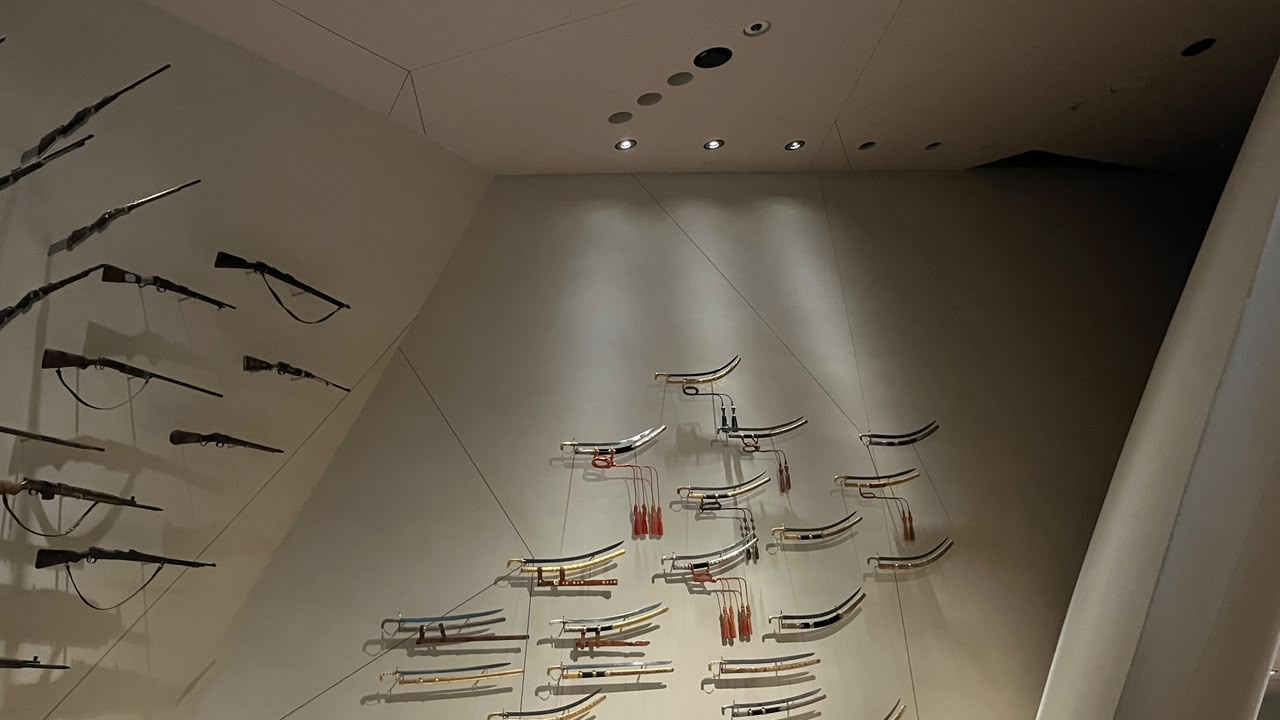
The display of swords offered another moment to pause. Light caught their curved forms and metallic surfaces. Shadows fell across the wall behind them, giving the arrangement another layer of depth.
For me, it was a reminder to look at the shadow as carefully as the illuminated object. The direction of light affects how a shape reads, which details stand out, and how the object relates to its background.
A photograph records only one view of that relationship. Walking through the space lets us see how it changes as our position changes too.
Light adds context
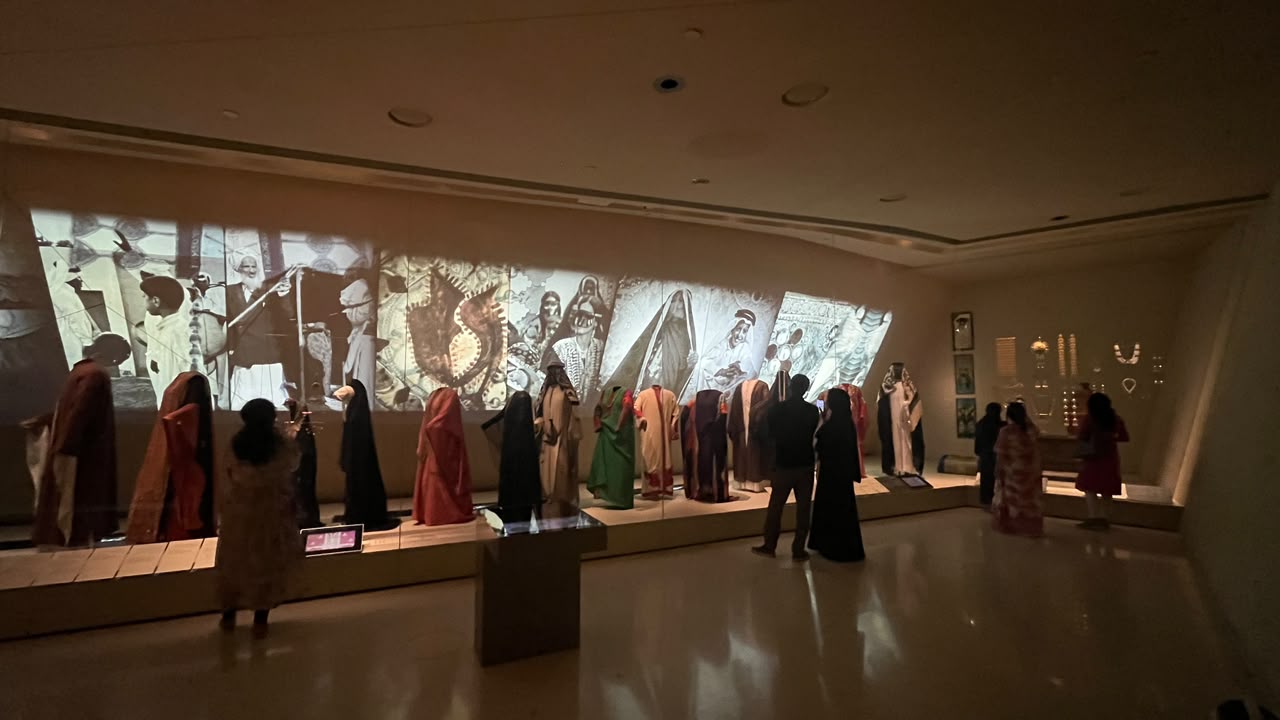
In another gallery, clothing stood in front of projected images of people and everyday life. The physical objects and the images seemed to speak to each other, connecting what was on display with the lives behind it.
This was where exhibition lighting and projection came together most clearly for me. One helped make the objects visible; the other brought people and scenes into the surrounding space.
As a visitor, I could look at a garment as an individual object, then step back and take in the wider scene. That shift gave me another way to connect with the display.
Looking at the whole experience
As a lighting designer, I often find myself looking up at fixtures and wondering how a scene has been put together. During this visit, I also found myself stepping back to look at the experience as a whole.
Light, projection, objects, and architecture worked together to shape where I looked and what I lingered over. The contrast between a focused display and its surroundings gave each gallery its own rhythm.
These are observations from my visit, rather than an account of the museum’s technical lighting specifications or the design team’s intentions. What interested me was how the spaces felt to move through, and how much the light contributed to that experience.
For me, this is the magic of museum lighting: the small decisions that help us make a connection with something beyond the display.
Three things I took away
- Light guides attention. The contrast between the warmly lit boat and blue projections gave my eye a clear place to begin.
- Shadows reveal form. The swords and their shadows reminded me to consider the background as part of the display.
- Projection adds context. Images of people and everyday life connected the displayed clothing to a wider story.
Which museum has left you with a scene you still remember?
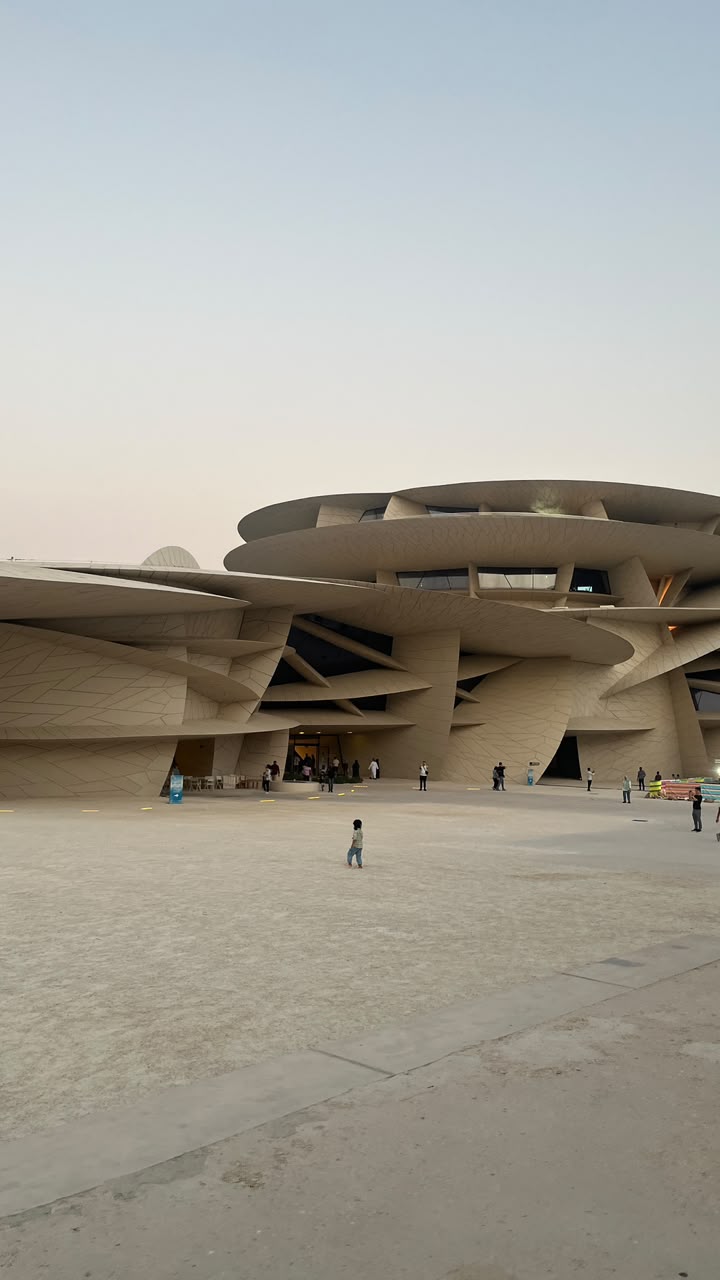
All photographs are from my visit to the National Museum of Qatar.

