
Lighting design is about more than just aesthetics — it’s about creating a responsive, flexible environment that works seamlessly with the user’s needs. In this guide, we’ll explore two popular lighting control systems: Casambi and DALI, and discuss how they impact the overall lighting design process.
Whether you’re designing a residential space or a large commercial building, understanding these systems and their unique characteristics will ensure your designs are intuitive, efficient, and adaptable.
⸻
Understanding the Basics: Casambi vs. DALI
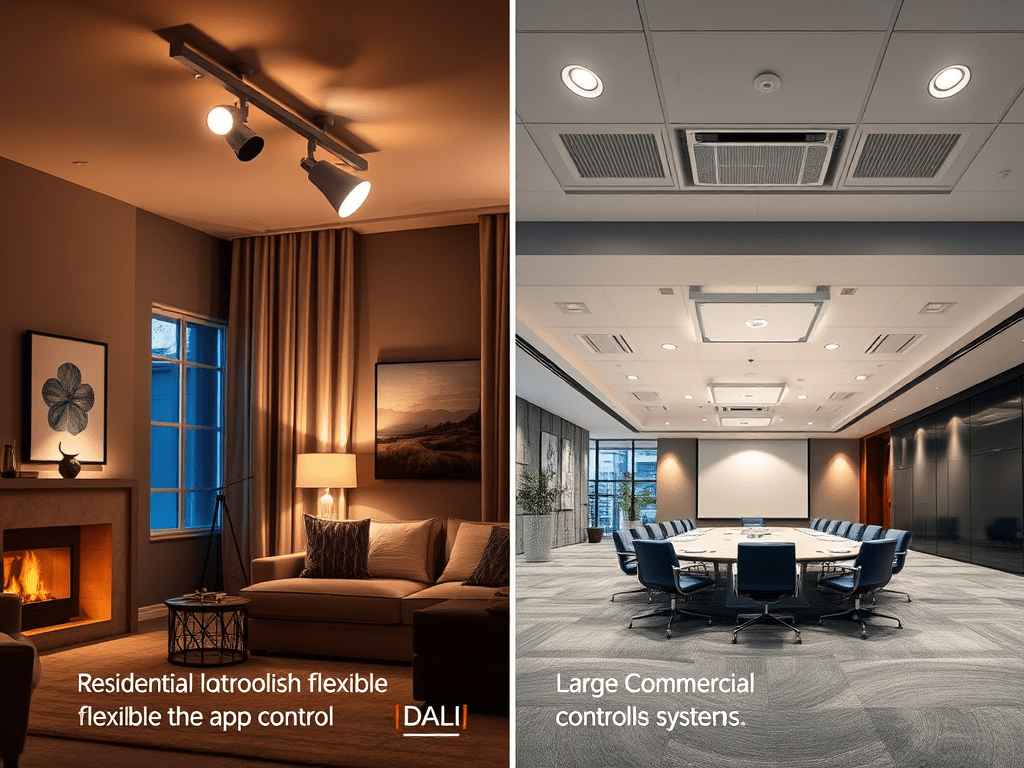
Before diving into the design impact, let’s get familiar with these two control systems:
• Casambi: A wireless Bluetooth-based control system that offers flexibility and simplicity in residential and commercial lighting. Lights can be controlled via smartphone, tablet, or wall-mounted switches.
• DALI: A wired control system that uses a bus to connect and address each light individually. It’s ideal for larger, more structured environments such as office buildings, hospitals, and industrial spaces.
While Casambi offers ease of installation and flexibility, DALI provides reliability and precision for large-scale, high-performance setups. So, how do these systems influence lighting design?
⸻
1. Design Freedom & Aesthetic Integration
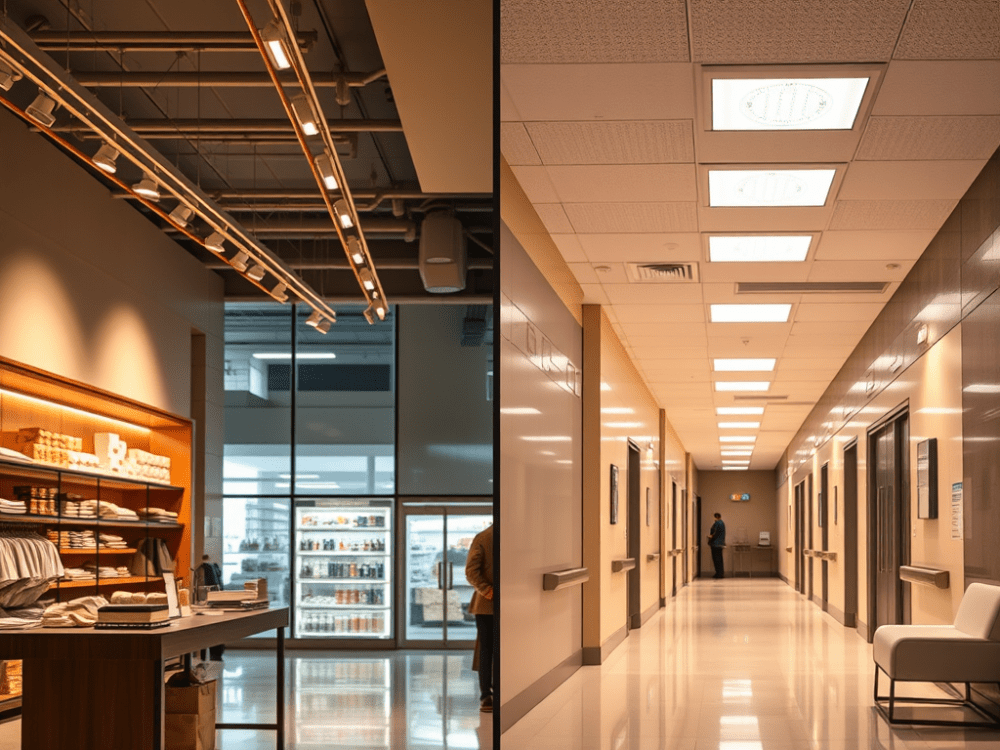
When integrating lighting into a space, freedom of design is key. Here’s how each system affects it:
• Casambi: Because it is wireless, Casambi allows for more freedom in fixture placement. There’s no need to consider complex wiring or circuit constraints. This makes it ideal for retrofits, open-ceiling designs, and situations where flexibility is required.
• DALI: While wired, DALI systems provide granular control over multiple lights at once, making it a great choice for centralized lighting or buildings with set lighting plans.
Impact on design:
Casambi shines in environments where you want to experiment and quickly make changes, such as in art galleries, retail spaces, or multifunctional areas. DALI, on the other hand, works well in large commercial spaces with fixed lighting setups.
⸻
2. Zoning and Scene Control
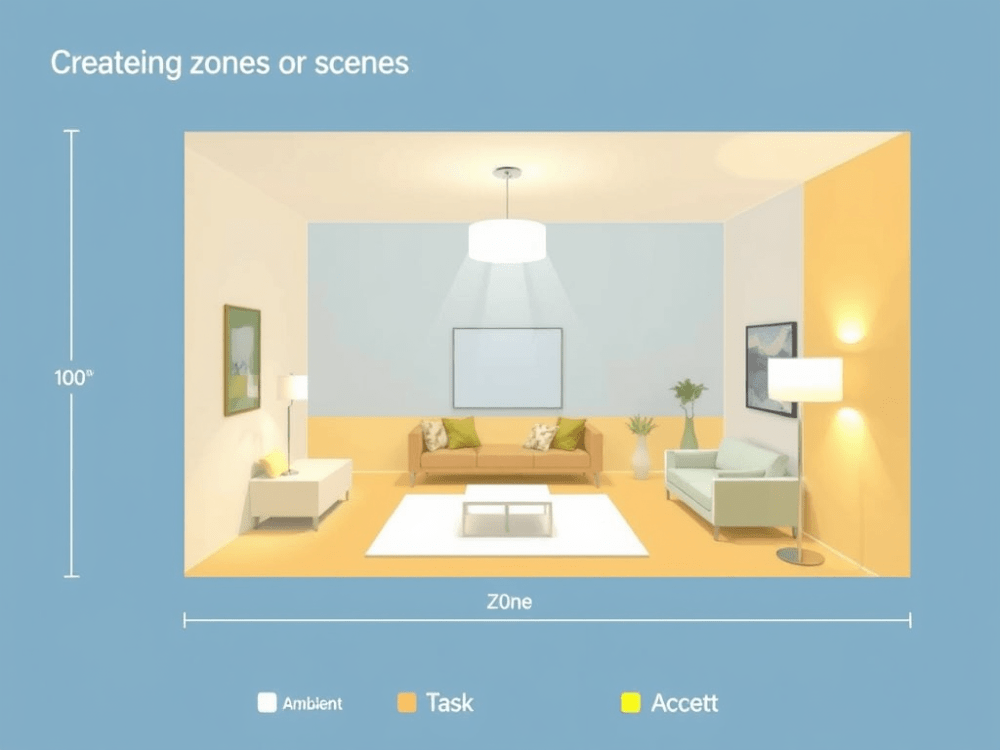
Both systems offer ways to group or control lights by zones, but their approach is different:
• Casambi: You can easily create zones or scenes directly from the app. It’s perfect for creating adaptive lighting setups that respond to changing needs.
• DALI: Lights are typically addressed via wiring, and zones are assigned during the initial setup. Though it’s more rigid, this system is great for large-scale, precise lighting control in spaces like hospitals, office buildings, or stadiums.
Impact on design:
If you’re designing for dynamic spaces that need frequent changes, Casambi is a better choice due to its wireless zones. However, for spaces that need reliable, centralized control, DALI is a solid option.
⸻
3. Maintenance & Flexibility
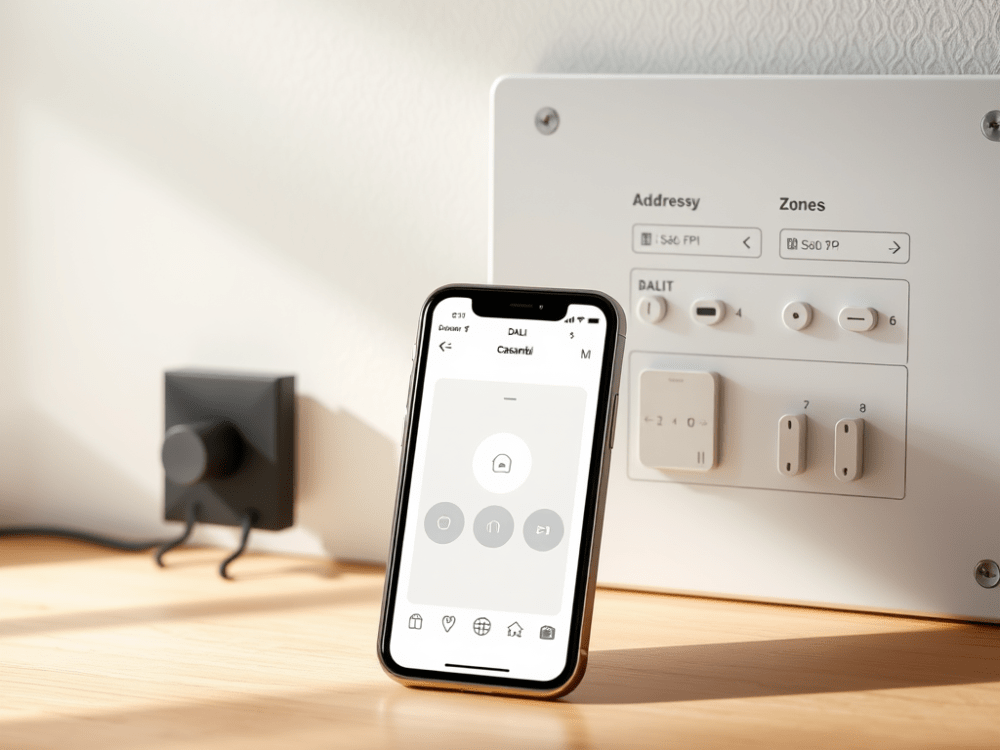
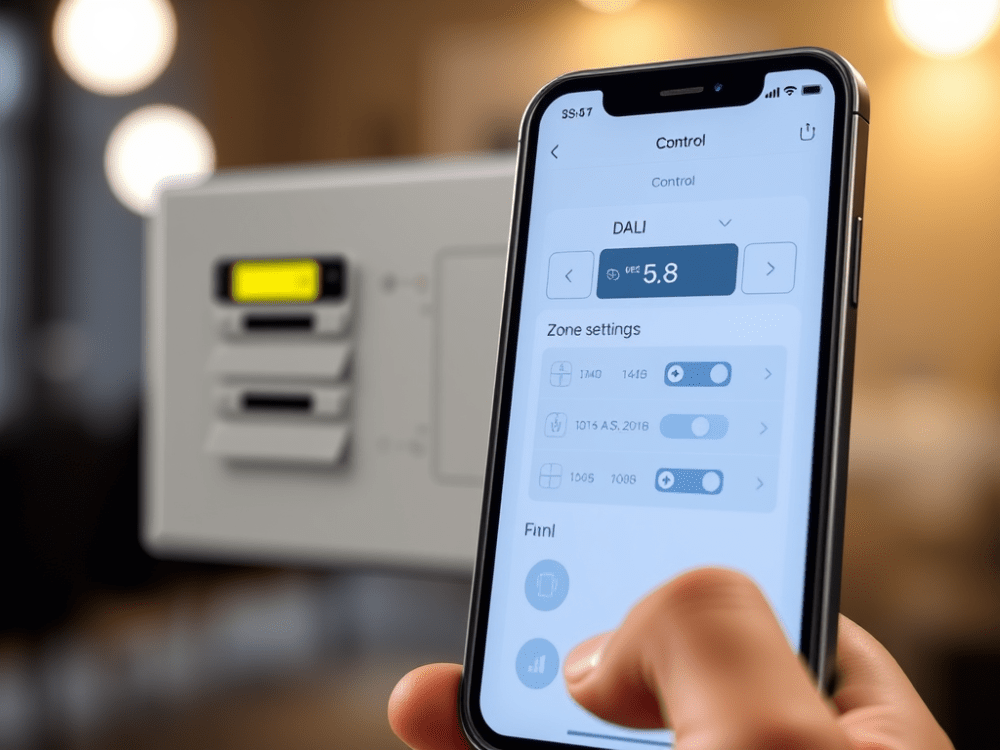
• Casambi: One of the standout features of Casambi is its future-proof flexibility. You can make changes easily by re-programming through the app, which is ideal for spaces that will change over time.
• DALI: Once the system is set up, it’s less flexible. However, its reliability is unmatched in high-stakes environments where downtime is costly.
Impact on design:
If the space you’re designing will change or evolve — think flexible office spaces or retail stores that update their layout regularly — Casambi is a perfect fit. If the space requires long-term stability and precision, DALI may be the better choice.
⸻
4. Integration with Other Systems
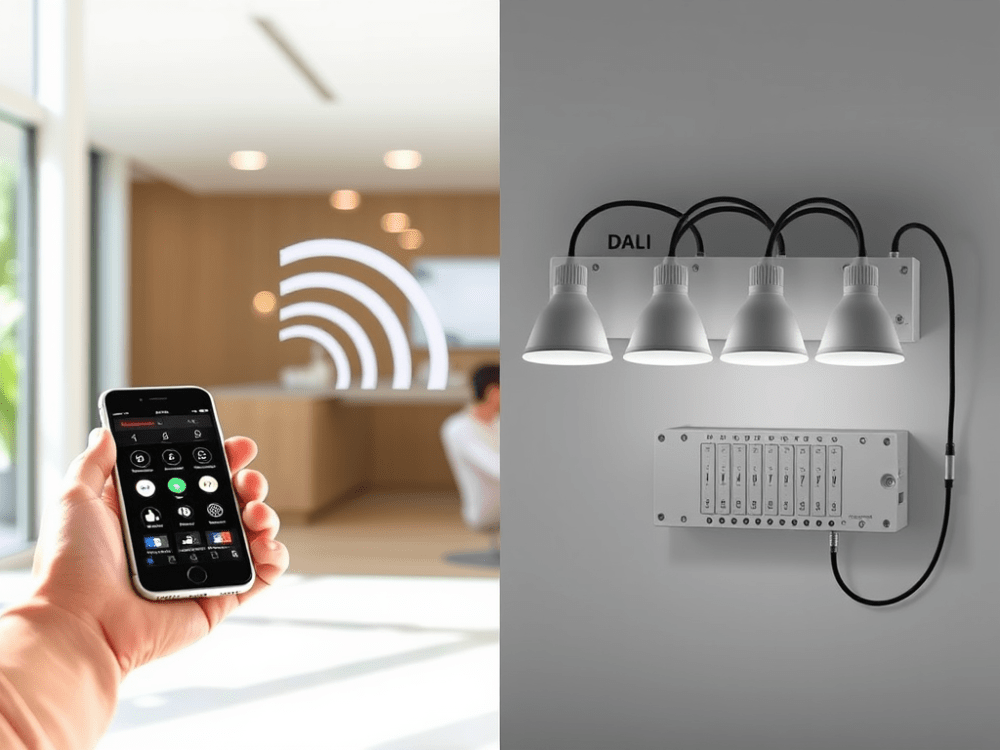
Lighting control isn’t isolated — it often needs to integrate with other systems in the building:
• DALI integrates seamlessly with Building Management Systems (BMS), which are crucial in large commercial spaces.
• Casambi, on the other hand, can connect via gateways and APIs, making it ideal for smart home setups but less suited for highly structured commercial environments.
Impact on design:
If your client needs integration with other building systems, DALI is a more logical choice. But if you’re working with a smart home or small business that wants easy control from a phone or tablet, Casambi fits perfectly.
⸻
Key Information to Consider When Choosing Casambi or DALI
To make the right decision, consider these key factors before choosing a control system for your lighting design:
1. Project Type & Scale
• Casambi works best for small to medium-sized projects (e.g., residential, retail, small offices).
• DALI is ideal for large-scale commercial and institutional projects (e.g., hospitals, schools, or office buildings).
2. Fixture Compatibility
• Does the fixture support Casambi-enabled drivers?
• Are your fixtures dimmable? Both systems require dimmable drivers for optimal control.
3. User Interaction
• Will users be controlling the lights via smartphones or wall switches? If yes, Casambi is easy to integrate.
• For facility managers in large spaces, DALI might provide better structure and control.
4. Wiring Constraints
• If you have flexibility in wiring, Casambi is an easy plug-and-play option.
• If you’re working in a fixed environment, DALI’s wired system offers more reliability.
5. Future Flexibility
• Casambi provides easy updates and reprogramming via the app, while DALI systems are more fixed but offer greater control over large areas.
Conclusion: Choose the Right System for Your Lighting Needs
The key to great lighting design is understanding how your control systems — Casambi and DALI — will impact the user experience, installation, and flexibility of the space. By choosing the right system for the job, you can create intuitive, adaptable lighting that enhances any environment.
Both systems offer unique advantages. Casambi excels in flexible, wireless control, while DALI provides reliable precision for large, structured spaces. By understanding these systems’ differences, you’ll be able to choose the right solution based on the project’s needs.
 The Glow Recipe
One Comment Add yours